
Defined how Verizon's AI Assistant could be seamlessly integrated across its broader product ecosystem — spanning mobile apps, web platforms, and customer support channels. With no established playbook for this type of integration, the project required building a strategic foundation from the ground up: identifying where the assistant belonged, how it should behave, and what consistency would look like across 11 touchpoints and 10 products. The output was a comprehensive experience strategy backed by 9 high-fidelity prototypes, user testing, and clear guidelines for cross-channel execution.
I structured the project into iterative phases, driving the development of prototypes to test hypotheses, gather insights, and refine designs through user feedback. My work contributed to 6 of the 9 high-fidelity prototypes, spanning 11 touchpoints and 10 products. I collaborated closely with research and strategy teams to ensure alignment with user needs and business goals.
I optimized final designs for production, presented key deliverables to Verizon executives, and engaged with stakeholders to secure alignment and buy-in.
TaskDefine potential use cases and touchpoints for the Verizon AI Assistant, focusing on seamless integration and cross-channel consistency to unify the ecosystem. This meant mapping an entirely new interaction model — one that had to work cohesively across products and channels that were never originally designed with a shared assistant in mind.
GoalUse exploration findings to establish the assistant's experience strategy, create best practices, and ensure consistency across channels for a cohesive user experience. The aim was to move from open-ended exploration to a durable, defensible framework that teams across the organization could act on.
Strategic Iteration.I led a 'learning by making' approach, emphasizing rapid iteration to explore this uncharted space. The project was structured into iterative batches to test hypotheses, address key challenges, and incorporate user feedback. Early prototypes provided quick insights, while later iterations refined fidelity to validate usability and functionality. This method ensured continuous adaptation, aligning designs with user needs and project goals while driving innovation.
Initial Prototyping Phase.Developed low-fidelity prototypes in the initial phase to explore client hypotheses and identify key opportunities. These prototypes surfaced critical insights, refining our focus for subsequent iterations. Rather than over-investing in early directions, this phase kept the team agile — allowing assumptions to be tested and discarded quickly before higher-fidelity work began.
Batch 1: Gathering Feedback and Early Insights.The first batch elevated prototypes to higher fidelity and underwent user testing to gather actionable feedback. Prototypes were informed by prior insights and strategy team findings, including market research, academic literature, and stakeholder discussions. Feedback refined our understanding of user needs and guided improvements.
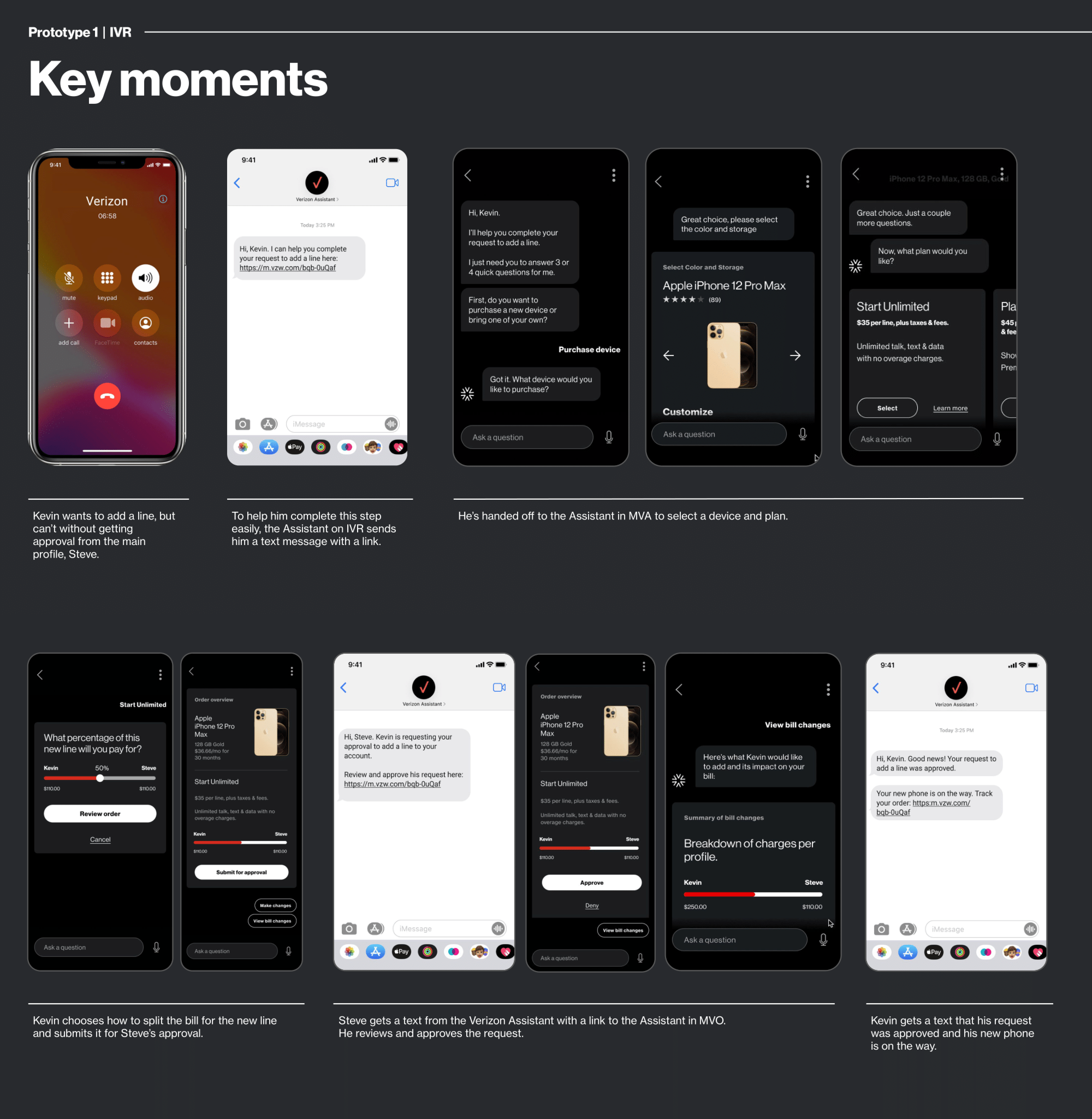
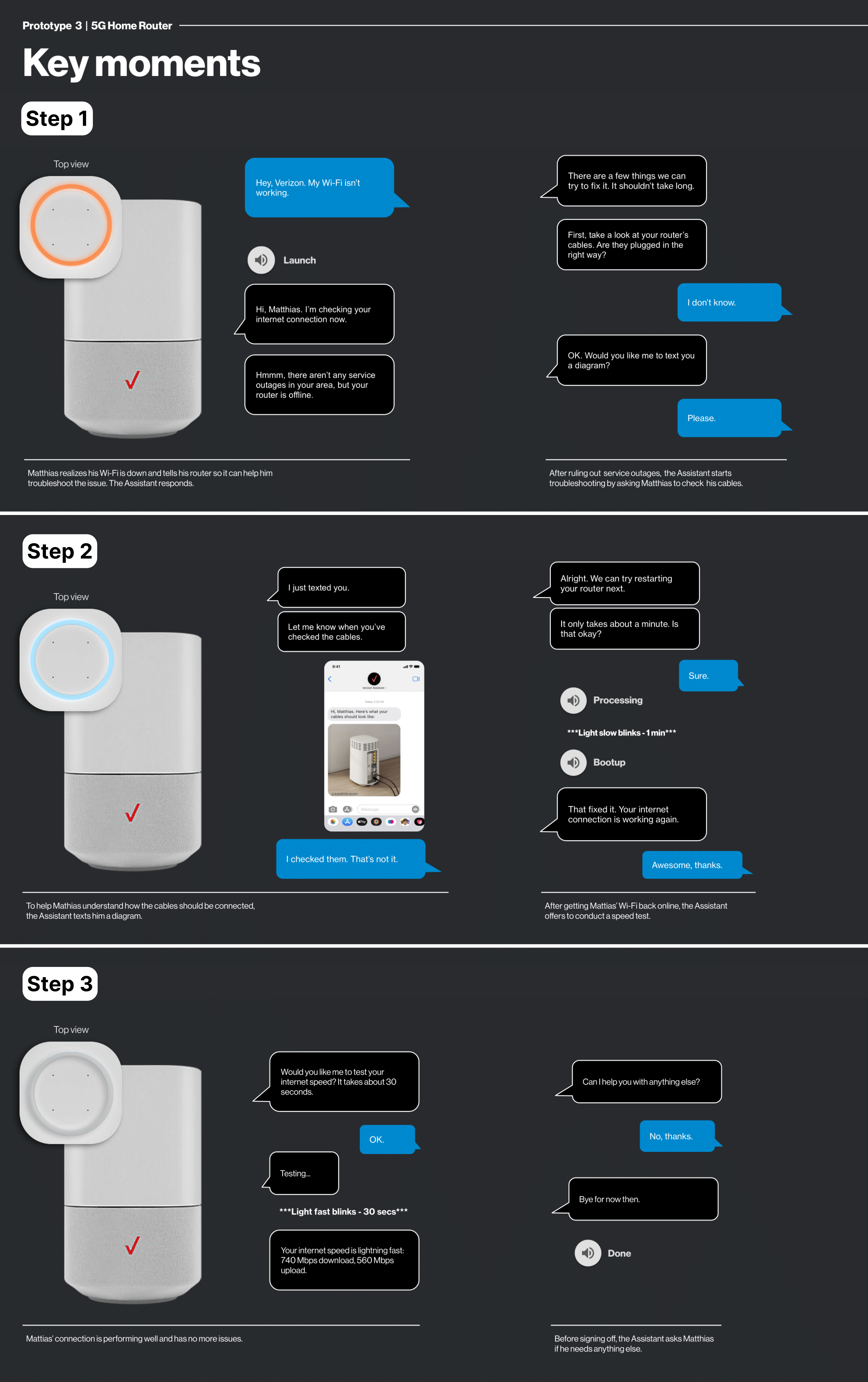
Batch 2: Refining and Aligning Prototypes.The second batch refined prototypes from the first round and introduced designs for new touchpoints. Final user testing provided insights for fine-tuning prototypes, ensuring alignment with user needs and strategic objectives. These fully optimized prototypes were delivered, ready for production.
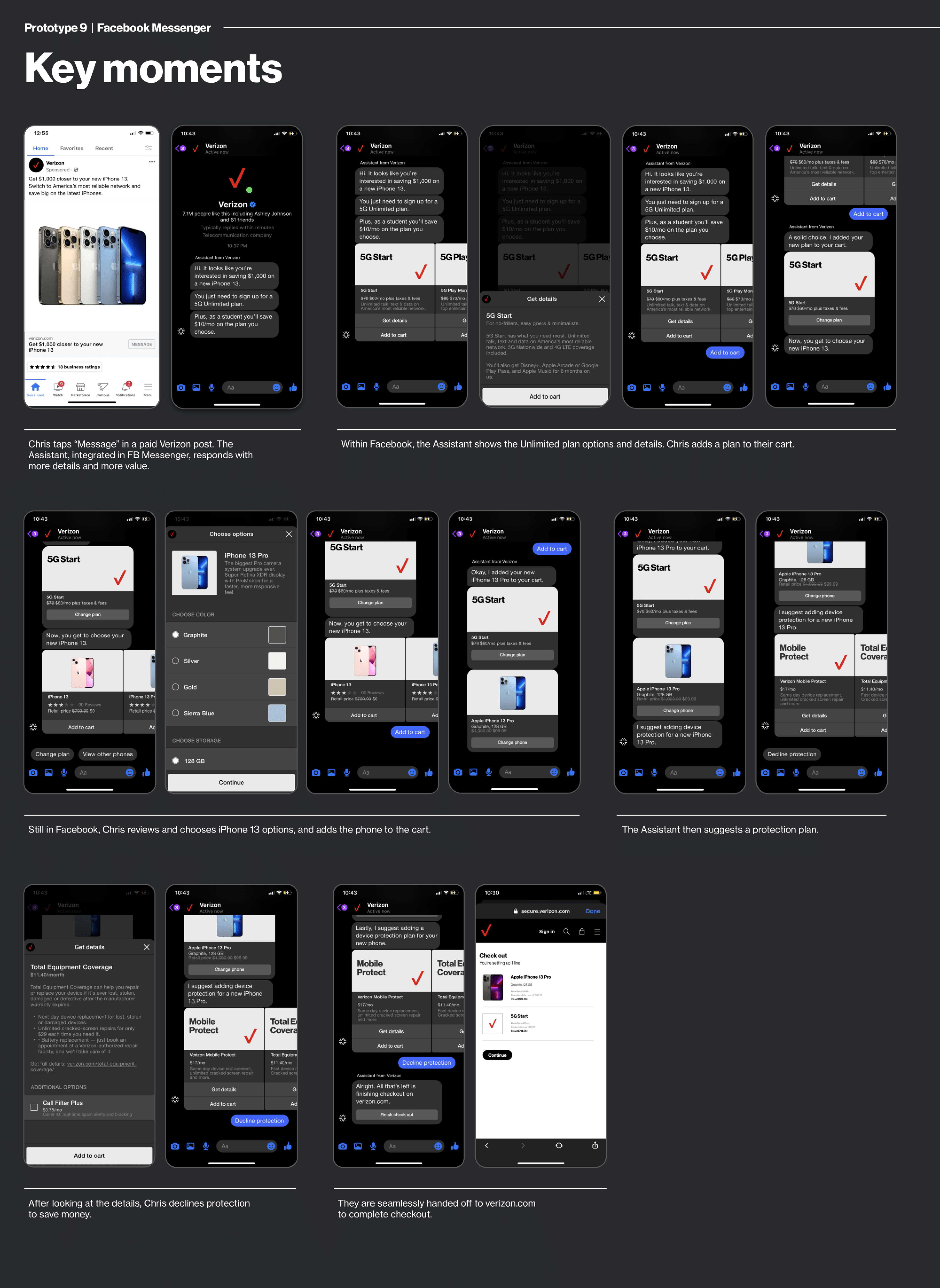
9 high-fidelity prototypes across 11 touchpoints and 10 products.User testing and the iterative 'learning by making' approach revealed key customer expectations for conversational assistant experiences, directly informing how resources were allocated for production-ready design. Presenting the final deliverables to Verizon executives, the work gave the organization a clear, actionable vision for how the AI Assistant could operate consistently across every channel it touched.
